
Did you know that over 300 billion emails are sent every single day? In such a crowded digital space, your message needs a reliable engine to reach your audience effectively.
Selecting the best email marketing platform is a critical step for any growing business. Whether you are a blogger or a small shop owner, your choice of software dictates how you connect with your community.
This email marketing comparison explores the top tools available today. We will look at how each service handles automation, design, and audience growth to help you decide.
Our email marketing software review breaks down the features of convertkit vs mailchimp vs getresponse. By understanding these core strengths, you can pick the tool that aligns perfectly with your unique goals.
Key Takeaways
- Choosing the right software is essential for scaling your business communication.
- Each platform offers distinct advantages for different types of users.
- Automation features can save you significant time and effort.
- Design flexibility impacts how your audience engages with your content.
- Understanding your specific growth goals simplifies the selection process.
The Evolution of Email Marketing for Digital Creators
Today, over 50 million people globally identify as content creators, fundamentally changing how we view online influence and community building. This massive shift has forced a complete redesign of the digital creators email tools that power modern businesses. Gone are the days when a simple newsletter was enough to sustain a brand.
In the past, email platforms focused primarily on basic broadcasts and static lists. However, the modern creator economy demands sophisticated automation and deep audience insights to survive in a crowded digital space. Creators now need platforms that act as a central hub for their entire business ecosystem.
Effective email marketing for creators now requires more than just sending messages. It involves tracking subscriber behavior, segmenting audiences based on interests, and automating complex sales funnels. These features allow creators to deliver personalized content that resonates with their specific niche.
The transition from simple mailing lists to dynamic growth engines has been rapid. Below is a breakdown of how the requirements for these platforms have changed over time to meet the needs of modern digital entrepreneurs.
| Era | Primary Focus | Key Requirement |
|---|---|---|
| Early Days | Basic Broadcasts | Simple Delivery |
| Growth Phase | List Building | Basic Segmentation |
| Modern Era | Monetization | Advanced Automation |
Ultimately, email marketing for creators is no longer just a communication channel. It is a vital asset for maintaining engagement and driving revenue in an increasingly competitive landscape. Choosing the right platform is the first step toward long-term success.
ConvertKit vs MailChimp vs GetResponse: The Real Winner for Digital Creators
Choosing the right email platform is a major milestone for any digital creator. When you look at convertkit vs mailchimp vs getresponse, you are not just picking a tool; you are choosing a partner for your growth. Each platform offers a unique philosophy that caters to different stages of your creative journey.
An effective email marketing comparison requires looking beyond basic features. While some creators need simple, streamlined automation, others require a robust suite of tools to manage complex sales funnels. Understanding these core differences helps you align your software choice with your specific business model.

For instance, GetResponse stands out by offering a comprehensive suite that includes built-in webinars and conversion funnels. This makes it a powerful choice for those who want an all-in-one solution. Conversely, platforms like ConvertKit focus heavily on the creator economy, prioritizing subscriber management and ease of use for content-driven businesses.
Reading a detailed email marketing software review can save you hours of trial and error. To help you visualize the landscape, we have compiled a quick comparison of these three industry leaders below.
| Platform | Primary Focus | Best For | Key Strength |
|---|---|---|---|
| ConvertKit | Creator Economy | Bloggers & Influencers | Subscriber Management |
| MailChimp | All-in-One Marketing | Growing Businesses | Design & Versatility |
| GetResponse | Automation Suite | Advanced Marketers | Webinars & Funnels |
Ultimately, the real winner depends on your specific needs. Whether you prioritize deep automation or user-friendly design, these platforms provide the foundation you need to succeed. We will explore these features in greater detail to ensure you make an informed decision for your brand.
Deep Dive into ConvertKit: Built for the Creator Economy
The creator economy demands specialized software, and ConvertKit answers this call with a streamlined approach. By focusing on the unique needs of bloggers, podcasters, and independent artists, the platform has become one of the most popular digital creators email tools available today.
Core Philosophy and Target Audience
At its heart, ConvertKit believes that creators should spend more time producing content and less time wrestling with complex software. The platform removes unnecessary clutter, allowing users to focus entirely on building and nurturing their audience.
This philosophy resonates deeply with those who monetize their art through newsletters or digital products. By prioritizing simplicity and direct communication, the tool ensures that your message reaches your subscribers without technical friction.
Key Features for Content Creators
ConvertKit offers a suite of features specifically designed to support email marketing for creators. One standout capability is its robust subscriber tagging system, which allows you to organize your audience based on their specific interests and behaviors.
Bloggers often find the RSS feed customization particularly useful for automating their newsletters. This feature ensures that your latest posts reach your readers automatically, keeping your audience engaged with minimal manual effort.
Furthermore, the platform is built to handle the complexities of selling digital products. Whether you are launching an e-book or a paid course, the integration between your content and your sales funnel is seamless and intuitive. This makes it an ideal choice for anyone looking to turn their creative passion into a sustainable business.
Analyzing MailChimp: The All-in-One Marketing Giant
Mailchimp remains a powerhouse for those seeking an all-in-one solution to manage their growing digital presence. While many platforms focus on niche audiences, this service provides a broad toolkit designed to scale alongside your ambitions. Conducting a thorough mailchimp features analysis reveals why it continues to be a top choice for diverse business models.

Platform Versatility and Design Focus
One of the most striking aspects of the platform is its commitment to intuitive design. Users can access a wide library of professional templates that make creating high-quality emails simple, even for those without coding skills. This focus on aesthetics ensures that your brand identity remains consistent across every campaign you send.
The interface is built to be user-friendly, allowing beginners to get started without a steep learning curve. However, the platform does not sacrifice depth for simplicity. You can easily transition from basic newsletters to complex customer journeys as your technical comfort grows.
Key Features for Growing Businesses
As your business expands, you need a system that connects with your existing tech stack. A major highlight of this mailchimp features analysis is the platform’s ability to integrate with over 250 external applications. These connections allow you to sync data seamlessly between your store, your social media, and your email lists.
Scalability is at the heart of the platform’s design. Whether you are managing a small list or a massive database, the tools provided help you maintain engagement through automated workflows. While some advanced features require a bit of time to master, the long-term benefits for a growing business are undeniable. By leveraging these robust capabilities, you can turn casual subscribers into loyal customers with greater efficiency.
Exploring GetResponse: The Automation Powerhouse
Scaling your business requires a robust set of tools, and GetResponse offers an impressive suite for this purpose. Many creators find that their needs grow beyond simple newsletters as their audience expands. This platform provides the infrastructure to manage complex marketing tasks with remarkable efficiency.
Beyond Email: The All-in-One Marketing Suite
While many platforms focus strictly on email delivery, GetResponse functions as a comprehensive ecosystem. It integrates landing pages, sales funnels, and even native webinar hosting for up to 500 attendees. This consolidation allows you to manage your entire customer journey from a single dashboard.
By keeping your assets in one place, you reduce the friction often caused by juggling multiple software subscriptions. You can create high-converting landing pages that feed directly into your automated email sequences. This seamless integration ensures that your marketing efforts remain consistent and professional across every touchpoint.
Key Features for Advanced Automation
The true strength of this platform lies in its sophisticated automation builder. It allows you to design complex workflows based on specific user behaviors, such as link clicks or purchase history. These trigger-based sequences help you deliver the right message at the perfect moment.
Advanced automation is not just about saving time; it is about creating a personalized experience for every subscriber. You can easily segment your audience based on their interactions with your content. This level of precision ensures that your marketing remains relevant, which ultimately drives higher engagement and conversion rates for your digital brand.
Ease of Use and User Interface Comparison
When you are just starting out, the complexity of your email software can either empower you or hold you back. Choosing a platform that aligns with your technical comfort level is essential for long-term success. A smooth interface allows you to focus on your content rather than fighting with complicated settings.
Onboarding Experience for Beginners
The journey begins the moment you sign up for a new service. Most modern platforms offer guided tours to help you set up your first list and verify your domain. Mailchimp is widely recognized for its highly intuitive drag-and-drop template builder, which makes it a favorite for those who prefer a visual approach to design.
ConvertKit takes a different path by focusing on a minimalist, text-first interface that appeals to bloggers and writers. GetResponse provides a comprehensive onboarding process that introduces you to its wide array of marketing tools right from the start. Each platform aims to reduce the learning curve, but your personal preference for visual versus functional design will dictate your final choice.
Dashboard Navigation and Workflow Efficiency
Once you are past the initial setup, the efficiency of your daily workflow becomes the priority. A well-organized dashboard should provide quick access to your subscriber data, campaign analytics, and automation triggers. Workflow efficiency is measured by how many clicks it takes to launch a standard newsletter or a simple welcome sequence.
Some users prefer the “all-in-one” approach where every tool is visible on the main menu. Others find that a cluttered dashboard can be overwhelming and prefer a cleaner, more focused environment. The following table highlights how these platforms compare in terms of user experience and navigation.
| Platform | Primary UI Strength | Best For | Learning Curve |
|---|---|---|---|
| ConvertKit | Minimalist/Text-focused | Creators & Writers | Low |
| Mailchimp | Visual Drag-and-Drop | Small Businesses | Low to Medium |
| GetResponse | Feature-Rich Suite | Advanced Marketers | Medium |
Ultimately, the best platform is the one that feels natural to your specific creative process. You should spend some time testing the free tiers of these services to see which dashboard layout feels most intuitive for your daily tasks.
Automation Capabilities and Workflow Complexity
Marketing automation is the engine that drives modern creator businesses forward. By moving beyond simple newsletters, you can create dynamic experiences that nurture your audience automatically. This shift allows you to focus on content creation while your systems handle the heavy lifting of subscriber engagement.
However, the complexity of these tools varies significantly between platforms. Understanding how to map out your customer journey is vital for long-term growth. Whether you are a beginner or a seasoned pro, choosing a platform that matches your technical comfort level is essential.
Comparing Visual Automation Builders
Visual builders are designed to help you see the big picture of your marketing strategy. These tools allow you to drag and drop elements to create complex paths for your subscribers. ConvertKit offers a clean, creator-focused interface that prioritizes simplicity, while MailChimp provides a more robust, design-oriented canvas for visual learners.
GetResponse stands out by offering a highly flexible environment. Users can build automation workflows from scratch or utilize a wide library of pre-built templates to save time. This versatility makes it a strong contender for those who want both power and ease of use.
- ConvertKit: Best for linear, content-driven paths.
- MailChimp: Ideal for visual marketers focused on e-commerce.
- GetResponse: Perfect for those needing advanced, multi-step logic.
Trigger-Based Sequences and Behavioral Logic
At the heart of effective automation lies behavioral logic. This technology tracks how your subscribers interact with your emails and website, allowing you to send highly personalized messages based on their specific actions. When a subscriber clicks a link or visits a product page, the system triggers a relevant follow-up sequence instantly.
Mastering these sequences does come with a learning curve. You must define clear goals for every trigger to ensure your communication remains helpful rather than intrusive. Strategic planning is the key to success here, as overly complex workflows can become difficult to manage if they are not documented properly.
“Automation is not about replacing the human touch; it is about scaling the reach of your message to the right people at the right time.”
By leveraging these advanced features, you can segment your audience with precision. This ensures that your subscribers receive content that aligns with their interests, ultimately leading to higher conversion rates and stronger community loyalty.
Segmentation and Subscriber Management
Segmentation allows you to send the right message to the right person at the right time. By dividing your email list into smaller, targeted groups, you ensure that your content remains highly relevant to every reader. This practice is essential for maintaining high open rates and building long-term trust with your audience.

How ConvertKit Handles Subscriber Data
ConvertKit is built specifically for creators who need a flexible way to organize their community. Instead of using rigid lists, the platform utilizes a tag-based system to manage and filter subscribers effectively.
You can apply tags based on specific actions, such as clicking a link or purchasing a product. This allows you to track individual interests without creating duplicate subscriber profiles. It is a streamlined approach that keeps your database clean and easy to navigate.
MailChimp Audience Management Strategies
MailChimp takes a more traditional approach by focusing on Audience lists. This structure is ideal for businesses that manage multiple distinct brands or separate customer groups under one account.
The platform provides robust tools to segment these audiences based on demographic data, purchase history, and engagement levels. While it feels more structured, it offers powerful filtering options for those who prefer a centralized management style. You can easily create segments that update automatically as new data flows into your account.
GetResponse Advanced Segmentation Tools
For high-volume senders, GetResponse offers a sophisticated suite of advanced segmentation tools. These features allow you to combine multiple conditions to create highly granular segments for your marketing campaigns.
You can filter users based on complex behavioral logic, such as time since last activity or specific website interactions. This level of detail is perfect for creators who need to execute precision-targeted automation. It ensures that your messaging is always tailored to the specific stage of the customer journey.
| Platform | Primary Method | Best For | Complexity |
|---|---|---|---|
| ConvertKit | Tag-based | Creators | Low |
| MailChimp | List-based | Small Businesses | Medium |
| GetResponse | Condition-based | Advanced Marketers | High |
Deliverability Rates and Sender Reputation
Achieving high deliverability is the silent engine behind every successful creator’s email strategy. Even the most compelling newsletter or product launch will fail if it never reaches the eyes of your subscribers. Sender reputation acts as your digital passport, determining whether your messages are welcomed into the inbox or relegated to the dreaded spam folder.
Why Deliverability Matters for Creators
For digital creators, your email list is your most valuable asset. When you send an email, internet service providers (ISPs) evaluate your sender reputation based on engagement metrics, bounce rates, and spam complaints. A poor reputation can lead to your emails being blocked entirely, which effectively silences your voice in the marketplace.
Maintaining a clean list and sending relevant content are the best ways to protect your standing. High engagement signals to ISPs that your audience actually wants to hear from you. Consistent inbox placement ensures that your hard work translates into actual traffic, sales, and community growth.
Platform-Specific Deliverability Benchmarks
Different email service providers manage their infrastructure in unique ways to ensure your messages arrive safely. Some platforms prioritize strict vetting of users to keep their IP addresses clean, while others focus on high-volume throughput. In recent controlled testing, ConvertKit achieved an impressive 96.7% inbox placement rate, demonstrating the effectiveness of its creator-focused infrastructure.
Understanding how your chosen platform handles these technical hurdles is vital for long-term success. The following table outlines key factors that influence how these platforms maintain their reputation and ensure your emails reach their destination.
| Platform | Infrastructure Focus | Reputation Management | Typical Inbox Rate |
|---|---|---|---|
| ConvertKit | Creator-centric delivery | Strict vetting of users | High (96.7%) |
| MailChimp | High-volume scalability | Automated reputation monitoring | Competitive |
| GetResponse | Advanced automation delivery | Dedicated IP options | Competitive |
Pricing Models and Value for Money
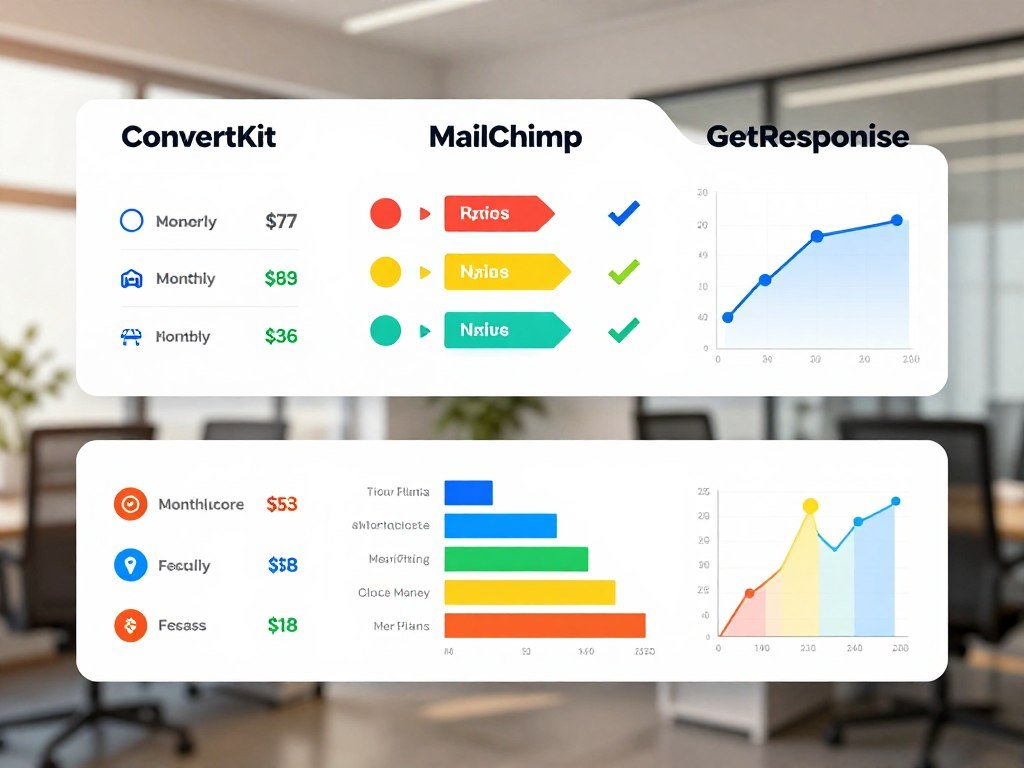
When you scale your subscriber list, the monthly cost of your marketing software becomes a critical factor in your overall profitability. Many creators start with free plans, but as your audience grows, you must evaluate which platform offers the best long-term return on investment. A thorough convertkit pricing comparison reveals that different platforms prioritize different business models, ranging from creator-focused tools to enterprise-grade suites.
ConvertKit Pricing Comparison
ConvertKit is designed specifically for the creator economy, which is reflected in its pricing structure. While it offers a robust free tier, the paid plans scale based on the number of subscribers you manage. For a list of 10,000 subscribers, you can expect to pay approximately $119 per month. This premium pricing is often justified by the platform’s specialized features for selling digital products and managing complex creator workflows.
MailChimp Feature-Gated Pricing Tiers
MailChimp utilizes a complex system of feature-gated tiers that can significantly impact your total cost of ownership. As your business grows, you may find that essential automation tools are locked behind higher-priced plans. This strategy forces users to upgrade even if they do not need the extra subscriber capacity. You should carefully audit which features are necessary for your daily operations to avoid paying for unnecessary bloat.
GetResponse Scalability and Cost Efficiency
For creators looking for a balance between power and affordability, GetResponse offers a compelling alternative. At the 10,000-subscriber milestone, the cost is roughly $59 per month, which is significantly lower than some competitors. This makes it a highly cost-efficient choice for those who need advanced automation without the high price tag. The platform is built to scale alongside your business, ensuring that your marketing budget remains predictable as you expand.
| Platform | Cost for 10k Subscribers | Primary Focus |
|---|---|---|
| ConvertKit | $119/month | Creator Economy |
| MailChimp | Varies by Tier | General Business |
| GetResponse | $59/month | Marketing Automation |
Landing Page and Form Building Tools
Capturing leads effectively requires more than just a simple sign-up box on your website. You need tools that balance aesthetic appeal with high-performance conversion logic to turn casual visitors into loyal subscribers.
Whether you are a blogger or a business owner, the right landing page builder acts as your digital storefront. It should be intuitive enough for beginners while offering enough depth for advanced marketers to run experiments.
Design Flexibility and Conversion Optimization
Design flexibility allows you to align your forms with your brand identity without needing a degree in graphic design. Most modern platforms provide drag-and-drop editors that make customization a breeze.
Conversion optimization is equally vital for your growth strategy. Features like A/B testing allow you to compare two versions of a page to see which one drives more sign-ups. GetResponse, for instance, offers a robust landing page builder that includes full customization and built-in testing tools to refine your results over time.
Integration with External Website Builders
Your email marketing tools must play nicely with your existing website infrastructure. Seamless integration ensures that your forms appear exactly where you want them, whether you use WordPress, Shopify, or a custom site.
Most platforms offer dedicated plugins or simple embed codes to bridge the gap between your site and your email list. This connectivity ensures that subscriber data flows automatically into your segments without manual entry. Choosing a tool that supports your specific tech stack is the secret ingredient to a smooth workflow.
| Platform | Builder Type | A/B Testing | Ease of Integration |
|---|---|---|---|
| ConvertKit | Template-focused | Limited | High (WordPress) |
| MailChimp | Drag-and-drop | Advanced | Excellent (E-commerce) |
| GetResponse | Full-featured | Included | High (Universal) |
E-commerce and Monetization Features
Turning your audience into revenue requires powerful monetization tools integrated directly into your workflow. Effective email marketing for creators is no longer just about sending newsletters; it is about building a sustainable business model that bridges the gap between content and commerce.

Selling Digital Products Directly
Platforms like ConvertKit have revolutionized the space by allowing creators to sell digital products and paid newsletters directly within their dashboard. This streamlined approach removes the need for complex third-party plugins or external payment gateways.
By keeping the transaction within the same ecosystem, you can easily trigger automated delivery sequences the moment a purchase is confirmed. This ensures that your subscribers receive their files immediately, creating a seamless customer experience that builds trust and encourages repeat sales.
Integration with Shopify and WooCommerce
For creators who manage larger inventories, robust integrations with e-commerce giants like Shopify and WooCommerce are essential. These connections allow you to sync your customer data and purchase history directly into your email platform.
You can leverage this data to drive sales through automated workflows, such as abandoned cart recovery emails or personalized product recommendations. By utilizing targeted behavioral logic, you can re-engage potential buyers who left items in their cart, significantly increasing your conversion rates.
| Feature | ConvertKit | MailChimp | GetResponse |
|---|---|---|---|
| Native Digital Sales | Yes | Limited | Yes |
| Shopify Sync | Advanced | Robust | Advanced |
| Abandoned Cart | Automated | Automated | Automated |
| Paid Newsletters | Built-in | Add-on | Add-on |
Ultimately, choosing the right tool for email marketing for creators depends on whether you prefer an all-in-one native solution or a deep integration with your existing store. Both paths offer significant opportunities to turn your engaged audience into a reliable revenue stream.
Customer Support and Educational Resources
Every creator eventually faces a technical hurdle, making access to expert guidance an essential part of your software choice. When you are in the middle of a high-stakes product launch, waiting days for a response is simply not an option. You need a partner that understands the urgency of your business needs.
Availability of Live Support Channels
The accessibility of help varies significantly across these platforms. GetResponse stands out by offering 24/7 support via email and live chat, available in eight different languages. This level of availability ensures that no matter your time zone, you can find assistance when you need it most.
Other platforms often rely on tiered support models. While some offer instant chat for premium users, others may push you toward email-only support for lower-priced plans. Reliability is key, so always check if your chosen tier includes the specific support channels you require for your daily operations.
“The quality of your support team is the true measure of a company’s commitment to its users’ success.”
Quality of Knowledge Bases and Creator Communities
Beyond direct support, the depth of self-service resources is vital for long-term growth. Most top-tier platforms provide extensive libraries of tutorials, webinars, and documentation. These resources are often the fastest way to learn new features without waiting for a support agent.
When evaluating these tools, consider the following aspects of their educational ecosystems:
- Video Tutorials: Look for step-by-step guides that walk you through complex automation setups.
- Community Forums: Active user groups allow you to learn from other creators who have solved similar problems.
- Knowledge Bases: A searchable, well-organized help center is essential for troubleshooting common errors.
Ultimately, the best platform is one that empowers you to solve problems independently while providing a safety net for when things get complicated. Investing time in these educational resources will pay off as you scale your marketing efforts and refine your audience engagement strategies.
Third-Party Integrations and Ecosystems
The true strength of an email service provider often lies in its ability to integrate with your existing tech stack. As your business grows, you will likely need to sync your email data with CRM software, social media platforms, and advanced analytics tools. A platform that acts as a central hub for your digital operations can save you hours of manual work every single week.
Choosing a tool that fits into your current workflow is essential for long-term success. When your systems communicate effectively, you can automate complex marketing tasks without needing a degree in computer science. This connectivity ensures that your subscriber data remains consistent across every touchpoint of your brand.

Connecting Your Tech Stack
Most creators start with a simple setup, but they eventually add tools for e-commerce, webinar hosting, and lead generation. A robust integration ecosystem allows you to pull data from these sources directly into your email platform. This creates a unified view of your audience, which is vital for delivering personalized content.
“The most successful creators are those who build a cohesive tech stack where every tool serves a specific purpose in the customer journey.”
Whether you are using Shopify for sales or Zapier to bridge gaps between apps, compatibility is key. You want a platform that supports native integrations for the most popular services. This reduces the need for custom coding and keeps your marketing operations running smoothly.
API Access and Developer Friendliness
For those who need more than standard plug-and-play options, the quality of an API is a major deciding factor. Mailchimp currently leads the group with over 700+ integrations available in its ecosystem, offering immense flexibility for growing businesses. This vast library makes it a top choice for teams that rely on a wide variety of third-party software.
However, ConvertKit and GetResponse also provide powerful API access for developers who want to build custom solutions. These platforms allow for custom webhook capabilities, which enable real-time data transfers based on specific subscriber actions. If you have a developer on your team, these advanced features provide the freedom to create a truly bespoke marketing environment.
Pros and Cons Summary Table
Navigating the landscape of digital creators email tools requires a careful look at the trade-offs between automation, design, and simplicity. Choosing the best email marketing platform depends heavily on your specific growth stage and technical comfort level.
To help you make a final decision, we have organized the core strengths and weaknesses of each provider. This overview ensures you can compare them side-by-side without getting lost in technical jargon.
Quick Reference Comparison Matrix
The following table highlights the primary differences between these services. Use this to conduct your own mailchimp features analysis or to review the convertkit pricing comparison at a glance.
| Platform | Best For | Key Strength | Primary Trade-off |
|---|---|---|---|
| ConvertKit | Creators & Bloggers | Monetization & Simplicity | Limited design templates |
| MailChimp | Small Businesses | All-in-one design tools | Complex pricing tiers |
| GetResponse | Advanced Marketers | Automation & Funnels | Steeper learning curve |
Identifying the Best Fit for Your Business Model
Selecting the right tool is not just about features; it is about how well the software supports your daily workflow. Consider these factors when making your final choice:
- ConvertKit is the top choice if you prioritize monetization tools and want to sell digital products without a complex setup.
- MailChimp serves businesses that need a broad range of design options and integrated marketing features in one place.
- GetResponse is ideal for those who need powerful, automated sales funnels and advanced behavioral logic to scale their operations.
Ultimately, your decision should align with your long-term goals. If you are a solo creator, focus on platforms that reduce your administrative burden. If you are managing a growing team, prioritize tools that offer robust reporting and deep integration capabilities.
Conclusion
Selecting the right tool for your digital business requires a clear look at your specific needs. This email marketing comparison highlights that ConvertKit, Mailchimp, and GetResponse each serve distinct purposes for creators and business owners.
Your choice depends on whether you prioritize creator-focused monetization or robust all-in-one marketing automation. A thorough email marketing software review helps you align platform features with your long-term revenue goals.
Performance metrics and pricing models play a vital role in your decision. You should weigh these factors carefully to ensure your selected software drives your business forward effectively.
The best email marketing platform is the one that fits your unique workflow today while allowing room for future expansion. We encourage you to sign up for free trials to test these tools in your own environment.
Hands-on experience remains the most reliable way to see which interface feels intuitive for your daily tasks. Start your journey toward better audience engagement by exploring these platforms today.
