

Did you know that nearly 38% of people stop engaging with a website if the layout is unattractive? This shocking fact shows how vital your choice of design tools is for long-term growth.
Trying to decide between the two biggest names on the market? Do not worry because I have been in your shoes before. Picking the right software can mean the difference between a smooth experience and hours of stress.
Whether you are building your first site or planning a revamp, you need a solution that works seamlessly. A strong online presence relies on how quickly you can turn a visitor into a buyer.
Comparing elementor vs thrive architect helps you find the most efficient way to manage your site. Let’s look at what matters most to help you reach your goals in the digital world.
Key Takeaways
- Identify which tool offers the fastest learning curve for new users.
- Discover built-in conversion features that help increase your sales.
- Compare the impact each plugin has on your site loading speeds.
- Evaluate the library of professional templates available for each platform.
- Understand the pricing models to see which fits your budget best.
- Learn which option provides better mobile responsiveness out of the box.
1. What Makes a Page Builder Essential for Affiliate Marketing Success
A high-quality page builder is the backbone of any successful affiliate marketing strategy. It’s the tool that enables marketers to create, customize, and optimize their websites without needing extensive coding knowledge.
The Role of Page Builders in Affiliate Conversions
Page builders play a crucial role in affiliate conversions by allowing marketers to design landing pages, sales funnels, and other critical elements that directly impact conversion rates. Efficient page builders enable the creation of high-converting pages that are both visually appealing and optimized for user experience.
Critical Features Affiliate Marketers Need
Affiliate marketers require page builders with specific features to maximize their campaigns. These include:
- Drag-and-drop functionality for ease of use
- A wide range of customizable templates
- Integration with email marketing and CRM tools
- A/B testing capabilities
- Mobile responsiveness
Why Your Choice of Page Builder Matters
Choosing the right page builder can significantly impact your affiliate marketing success. The best page builder for affiliate marketers should offer a balance between functionality, ease of use, and cost. Here’s a comparison of key aspects to consider:
| Feature | Importance for Affiliate Marketers | Impact on Conversions |
|---|---|---|
| Drag-and-Drop Editor | High | Simplifies page creation, increasing efficiency |
| Customizable Templates | High | Enhances brand consistency and appeal |
| Integration with Marketing Tools | Medium | Streamlines campaign management |
| A/B Testing | High | Directly improves conversion rates |
The right page builder can make a significant difference in your affiliate marketing efforts, providing the tools needed to create high-converting pages and streamline your workflow.
2. Elementor Deep Dive: Complete Feature Breakdown
Diving into Elementor, it’s clear that this WordPress page builder has revolutionized web design with its extensive feature set. Elementor is not just a tool; it’s a comprehensive solution for web designers and developers alike.
Core Functionality Overview
Elementor’s core functionality is centered around its drag-and-drop interface, making it accessible to users of all skill levels. It offers a wide range of design capabilities, from basic layout adjustments to complex design elements without needing to write code.
Elementor Free vs Elementor Pro Differences
The free version of Elementor is robust, offering a significant number of features that cater to basic to intermediate web design needs. However, Elementor Pro unlocks additional features such as advanced styling options, more widgets, and premium support. The Pro version is ideal for professionals and businesses requiring more sophisticated design and customization options.
As noted by a WordPress expert, “Elementor Pro takes the already impressive free version to the next level with its advanced features and premium support, making it a worthwhile investment for serious web designers.”
“Elementor Pro takes the already impressive free version to the next level with its advanced features and premium support.”
Widget Library and Design Elements
Elementor boasts an extensive widget library that includes everything from basic text and image widgets to more complex elements like pricing tables and video boxes. This library is further expandable with third-party widgets, enhancing its functionality.
Unique Selling Points for Affiliates
For affiliate marketers, Elementor’s ability to create high-converting landing pages without coding is a significant advantage. Its flexibility and customization options allow for the creation of tailored affiliate marketing campaigns.
| Feature | Elementor Free | Elementor Pro |
|---|---|---|
| Drag-and-Drop Interface | Yes | Yes |
| Basic Widgets | Yes | Yes |
| Advanced Styling Options | No | Yes |
| Premium Support | No | Yes |

3. Thrive Architect Complete Analysis
Thrive Architect is redefining the way affiliate marketers approach website building and conversion optimization. As a next-generation page builder from Thrive Themes, it has been designed with a specific focus on marketing and conversion.
Thrive Architect’s Foundation and Philosophy
Thrive Architect is built on a philosophy of putting conversions first. It’s designed to help marketers create websites that are optimized for converting visitors into customers. This approach is reflected in its intuitive interface and feature set, which are geared towards maximizing conversion rates.
Standalone vs Thrive Suite Membership
Thrive Architect can be purchased as a standalone product or as part of the Thrive Suite membership. The standalone version offers a robust set of features for building and optimizing websites. The Thrive Suite membership, on the other hand, provides access to a comprehensive suite of marketing tools, including Thrive Architect, Thrive Leads, and Thrive Quiz Builder, among others. For affiliate marketers, the Thrive Suite can offer a more holistic approach to marketing and conversion optimization.
Conversion-First Design Approach
One of the standout features of Thrive Architect is its conversion-first design approach. The tool is designed to help marketers create landing pages and websites that are optimized for conversion. This includes a range of features such as customizable templates, advanced CTA buttons, and a focus on user experience.
Key Features That Stand Out
Some of the key features that make Thrive Architect stand out for affiliate marketers include its advanced customization options, user-friendly interface, and focus on conversion optimization. Additionally, its ability to integrate with other marketing tools and plugins makes it a versatile choice for marketers looking to build a comprehensive marketing stack.
4. Pricing Breakdown and Value Assessment
The pricing models of Elementor and Thrive Architect are key factors that can significantly impact an affiliate marketer’s budget and return on investment (ROI). Understanding these costs is crucial for making an informed decision.
Elementor Pricing Tiers Explained
Elementor offers a flexible pricing structure with both free and paid options. The free version is a good starting point, but for more advanced features, Elementor Pro is available. Elementor Pro starts at $59 per year for a single site, making it an affordable option for many affiliate marketers.
Thrive Architect Pricing Models
Thrive Architect, on the other hand, is priced at $97 for a single-site license. It is also available as part of the Thrive Suite membership for $299 per year, which includes a suite of marketing tools. This makes Thrive Architect a more expensive upfront option compared to Elementor.
Cost Per Site and Scalability
When considering scalability, Elementor’s pricing model becomes more attractive as it allows for easier upgrades and additions of more sites without a significant increase in cost. For instance, Elementor’s Pro version can be used on up to 1,000 sites for $999 per year.
To better understand the cost implications, let’s examine a comparison table:
| Page Builder | Single Site License | Multi-Site License |
|---|---|---|
| Elementor Pro | $59/year | $999/year (up to 1,000 sites) |
| Thrive Architect | $97 (one-time) | $297 (one-time, 5 sites) |
Return on Investment for Affiliate Marketers
Affiliate marketers should consider not just the cost but also the potential return on investment. Both Elementor and Thrive Architect offer features that can enhance conversion rates and potentially increase earnings. The choice between them should be based on which tool better aligns with their marketing strategy and budget.

Ultimately, the decision comes down to assessing the value each page builder brings to your affiliate marketing efforts and determining which one offers the best ROI.
5. User Experience and Learning Curve Comparison
For affiliate marketers, selecting the right page builder is not just about features, but also about the overall user experience. Both Elementor and Thrive Architect offer unique approaches to building websites, but their user experiences differ significantly.
Elementor’s Drag-and-Drop Interface
Elementor’s interface is known for being straightforward, allowing users to easily drag and drop elements onto their page. As noted by a WordPress expert,
“Elementor’s drag-and-drop functionality makes it easy for users to create complex layouts without needing to write code.”
Thrive Architect’s Editor Experience
Thrive Architect focuses on conversion-centric design. Its editor experience is also drag-and-drop but is tailored towards creating high-converting pages. Thrive Architect’s interface is intuitive, making it easier for users to focus on creating content.
Onboarding and Time to First Landing Page
Thrive Architect is designed to get users up and running quickly with its streamlined process, allowing for rapid creation of landing pages.
Best Choice for WordPress Beginners
For WordPress beginners, Thrive Architect is often considered the better choice due to its less steep learning curve and focus on conversion optimization. As stated by a marketing specialist,
“Thrive Architect’s focus on conversions makes it an ideal choice for those new to affiliate marketing.”
6. Template Libraries and Design Resources
When it comes to creating effective affiliate marketing campaigns, the right template library can make all the difference. Both Elementor and Thrive Architect offer extensive template libraries that cater to different needs and preferences.
Elementor’s Template Ecosystem
Elementor boasts an impressive collection of over 100 full website kits and 100 widgets, providing users with a wide range of design options. This vast library allows affiliate marketers to create diverse and engaging content.
Thrive Architect’s Conversion-Focused Templates
Thrive Architect, on the other hand, focuses on conversion-optimized designs, offering over 350 specialized landing page templates. These templates are designed to maximize conversions and are tailored to the needs of affiliate marketers.

| Feature | Elementor | Thrive Architect |
|---|---|---|
| Number of Templates | 100+ full website kits | 350+ landing page templates |
| Customization Options | Highly customizable | Conversion-focused designs |
Customization and Branding Options
Both page builders offer robust customization options, allowing users to tailor templates to their brand identities. This flexibility is crucial for affiliate marketers seeking to establish a consistent brand image.
7. Conversion Optimization Tools for Affiliate Campaigns
For affiliate marketers, selecting a page builder that excels in conversion optimization is paramount for achieving campaign goals. Both Elementor and Thrive Architect offer a range of tools designed to enhance conversion rates, but they differ in their approaches and features.
Landing Page Elements and CTA Builders
Thrive Architect stands out with its conversion-focused design approach, offering a variety of landing page elements and CTA builders that are specifically designed to maximize conversions. Its templates and elements are crafted with the goal of persuading visitors to take action.
Elementor, on the other hand, provides a wide range of widgets and design elements that can be used to create effective landing pages. While it may not be as focused on conversion optimization as Thrive Architect, Elementor’s flexibility allows for the creation of highly customized pages.
Lead Capture and Opt-in Form Capabilities
Thrive Architect excels in lead capture with its integrated lead generation forms and opt-in capabilities. These features are designed to help affiliate marketers grow their email lists and nurture leads.
Elementor also supports lead capture through its form builder, although it may require additional plugins for advanced features. The native form builder is straightforward and easy to use, making it a viable option for simple lead capture needs.
A/B Testing Features Comparison
A/B testing is a critical feature for optimizing conversions. Thrive Architect offers A/B testing capabilities through its Thrive Optimize plugin, allowing users to test different versions of their pages and determine which performs better.
Elementor does not have native A/B testing features, relying on third-party integrations for this functionality. This can be effective but may add complexity and cost to the setup.
Countdown Timers and Scarcity Elements
Creating a sense of urgency is a powerful tactic for increasing conversions. Thrive Architect includes countdown timers and scarcity elements as part of its toolkit, making it easy to implement these strategies.
Elementor users can also achieve similar effects using various widgets and plugins available within its ecosystem, although it might require more setup and customization.
In conclusion, while both Elementor and Thrive Architect offer valuable conversion optimization tools, Thrive Architect’s focused approach and integrated features give it a slight edge for affiliate marketers prioritizing conversion rate optimization.
8. Website Performance and Loading Speed Analysis
In the world of affiliate marketing, a fast-loading website is not just a luxury, it’s a necessity. The choice between Elementor and Thrive Architect can significantly impact your site’s performance.
Elementor’s Impact on Page Speed
Elementor is a powerful page builder, but its impact on page speed can be significant, especially when using its extensive feature set. While Elementor Pro offers numerous design and functionality enhancements, it can introduce additional weight to your site, potentially slowing it down.
Thrive Architect’s Performance Metrics
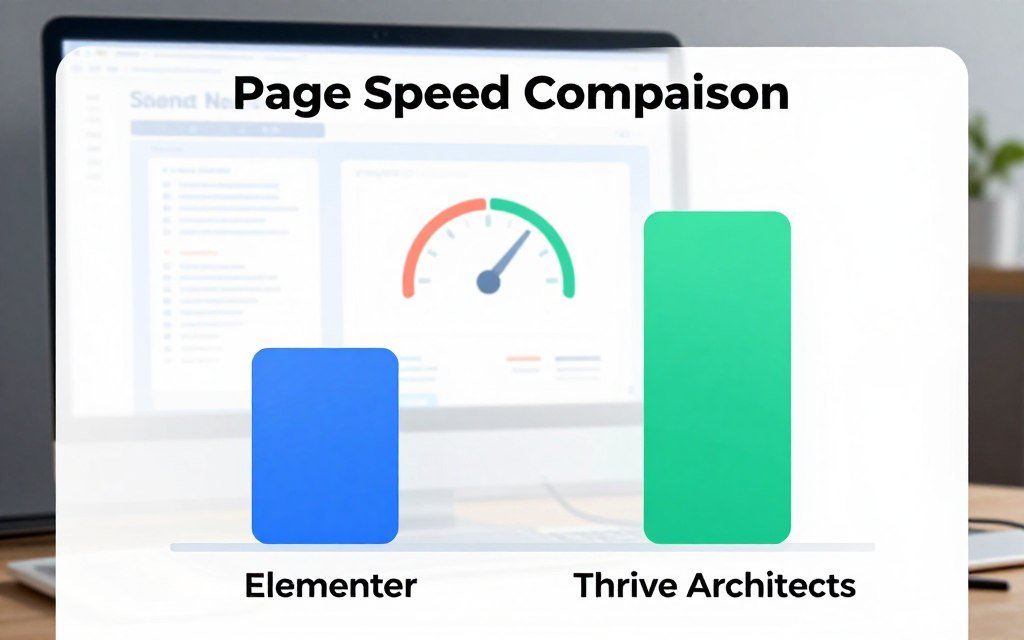
Thrive Architect, on the other hand, is designed with performance in mind. Tests have shown that Thrive Architect is generally faster than Elementor Pro, with noticeable differences in page load times. This is crucial for affiliate marketers, as faster sites tend to have better conversion rates.
Code Quality and Bloat Considerations
The code quality and potential bloat of a page builder can significantly affect your site’s loading speed. Thrive Architect is known for its lean code and minimal bloat, making it a good choice for those prioritizing speed.
SEO Implications for Affiliate Sites
Page speed is a critical SEO factor. Slow-loading sites can be penalized by search engines, affecting your affiliate site’s visibility and traffic. Choosing a page builder that prioritizes performance, like Thrive Architect, can help mitigate this risk.
| Feature | Elementor Pro | Thrive Architect |
|---|---|---|
| Average Load Time | 2-3 seconds | 1-2 seconds |
| Code Quality | Moderate Bloat | Lean Code |
| SEO Impact | Potential Penalties | Optimized for SEO |
9. Third-Party Integrations and Compatibility
Third-party integrations play a vital role in enhancing the functionality of websites built with Elementor and Thrive Architect. Both WordPress page builders are designed to work seamlessly with a wide range of third-party tools and services, making them versatile choices for affiliate marketers.
Email Marketing Service Integrations
Both Elementor and Thrive Architect offer robust integrations with popular email marketing services. This allows users to easily connect their websites to email marketing platforms, enabling efficient campaign management and subscriber list building.
- Elementor integrates with services like Mailchimp and Constant Contact.
- Thrive Architect also supports major email marketing platforms, ensuring compatibility with most marketing stacks.
CRM and Marketing Automation Connections
For affiliate marketers, integrating their website with CRM systems and marketing automation tools is crucial. Elementor and Thrive Architect facilitate these connections, allowing for streamlined lead management and personalized marketing efforts.
Analytics and Conversion Tracking Tools
To measure the success of their campaigns, affiliate marketers need to integrate their websites with analytics and conversion tracking tools. Both page builders support integration with Google Analytics and other tracking services.
WooCommerce and E-commerce Compatibility
For those involved in e-commerce, compatibility with WooCommerce is essential. Both Elementor and Thrive Architect are compatible with WooCommerce, enabling the creation of powerful online stores.
In conclusion, both Elementor and Thrive Architect demonstrate strong compatibility with various third-party tools and services, enhancing their utility for affiliate marketers and e-commerce businesses alike.
10. Mobile Optimization and Responsive Design Features
With the majority of internet users accessing websites through mobile devices, having a responsive design is no longer optional. Both Elementor and Thrive Architect understand this necessity and offer robust mobile optimization features.
Mobile Editing Capabilities Compared
Elementor provides a dedicated mobile editing mode, allowing users to customize their website’s mobile view with ease. Thrive Architect also offers mobile-specific editing capabilities, enabling affiliates to tailor their content for smaller screens. While both page builders offer mobile editing, Elementor’s interface is more intuitive, making it easier for users to make adjustments on the fly.
Responsive Design Controls
Both page builders come equipped with responsive design controls, ensuring that affiliate marketing landing pages look great on any device. Thrive Architect’s conversion-focused approach means that its responsive design features are geared towards maximizing conversions, while Elementor’s more general approach provides a broader range of customization options.
Mobile Conversion Rate Considerations
A well-designed mobile experience is crucial for affiliate marketers, as it directly impacts conversion rates. A seo-friendly page builder like Elementor or Thrive Architect can help ensure that affiliate marketing campaigns perform well on mobile devices. By optimizing for mobile, affiliates can improve user experience, increase engagement, and ultimately drive more conversions.

11. Which is the Best Page Builder for Affiliate Marketers: Head-to-Head Comparison
For affiliate marketers, the choice of page builder can significantly impact their campaign’s success, with Elementor and Thrive Architect being top contenders. Both platforms offer unique features that cater to different aspects of affiliate marketing.
Side-by-Side Feature Comparison Table
A direct comparison of Elementor and Thrive Architect reveals their differing strengths. The following table summarizes key features:
| Feature | Elementor | Thrive Architect |
|---|---|---|
| Drag-and-Drop Interface | Yes | Yes |
| Conversion-Focused Templates | Limited | Extensive |
| Third-Party Integrations | Extensive | Limited |
Elementor’s Strengths for Affiliate Marketing
Elementor’s versatility and wide range of design elements make it suitable for various website types, including affiliate marketing sites. Its extensive template library and third-party integrations are particularly beneficial.
- Wide range of design elements and templates
- Extensive third-party integrations
- User-friendly interface
Thrive Architect’s Advantages for Affiliates
Thrive Architect is specifically designed with conversion optimization in mind, making it an ideal choice for affiliate marketers focused on landing page performance. Its features include:
- Conversion-focused templates and design elements
- Advanced lead capture and opt-in form capabilities
- A/B testing features
Recommended Use Cases for Each Builder
Elementor is recommended for affiliate marketers who need a versatile page builder for various website types. Thrive Architect is ideal for those primarily focused on creating high-converting landing pages.
12. Conclusion
Affiliate marketers seeking to optimize their online presence must carefully consider their page builder choice. This comparison between Elementor and Thrive Architect highlights the distinct advantages of each platform.
Elementor’s extensive feature set and flexibility make it an attractive option for those who value versatility and a wide range of design possibilities. On the other hand, Thrive Architect’s conversion-focused approach and seamless integration with Thrive Suite tools make it ideal for marketers prioritizing campaign performance.
When evaluating Elementor and Thrive Architect, consider factors such as ease of use, customization options, and integration with existing tools. Ultimately, the decision comes down to the specific needs of the affiliate marketer, whether that’s broad design flexibility or specialized conversion optimization features.
By understanding the strengths of each page builder, affiliate marketers can make an informed decision that aligns with their marketing strategy, enhancing their online presence and campaign effectiveness.